
The excitement of a home remodel is almost entirely visual. It is found in the textured grain of white oak flooring, the cold weight of a quartz countertop, or the way natural light spills through a newly widened bank of black-framed windows. Homeowners spend months curation mood boards, collecting tile samples, and debating the precise undertone of a kitchen island paint color. This creative process represents the dream of what a home can become.
However, a dangerous trap lies just beneath the surface of these aesthetic choices. Too often, the invisible infrastructure that allows a home to function safely, cleanly, and comfortably is completely ignored during the planning phases. It is easy to forget that a beautiful kitchen island still needs a functional drain pipe beneath it, or that a luxury master suite addition will demand a massive amount of climate control and water volume.
Skipping an infrastructure audit before a major remodel can lead to catastrophic financial surprises. There are few construction nightmares worse than watching a crew tear through pristine, newly painted drywall because an ancient waste line collapsed or an undersized utility pipe choked under the pressure of a new appliance. When a home’s core systems fail, they do not care how expensive your backsplash tile was; they will ruin it just the same.
A successful remodel must be approached from the inside out, starting with the hidden systems buried in the yard, behind the walls, and under the floors. By thoroughly auditing and upgrading your water supply, waste management, environmental controls, and exterior shielding before cosmetic work begins, you protect your financial investment. This comprehensive guide provides a practical blueprint for preparing your home’s infrastructure to support your renovation goals for decades to come.
Calculating Load Capacity Before Adding Bathrooms or Bedrooms

When a renovation project involves expanding the footprint of a home or increasing the number of occupants, the very first system that demands close scrutiny is the waste disposal infrastructure. This is particularly true for properties that operate on independent, localized utilities rather than centralized municipal grids. Every toilet flush, shower drain, and washing machine cycle places a quantifiable volumetric demand on the earth beneath your lawn. If you plan to add a guest bath, a wet bar, or a couple of extra bedrooms, your household’s daily wastewater output will jump significantly.
Before a single framing nail is driven, it is vital to locate the primary waste lines leaving the foundation and schedule a comprehensive diagnostic check. Heavy construction vehicles, such as excavators, dump trucks, and concrete mixers, will soon be traversing the property. If these vehicles roll over a shallowly buried line or an unmapped tank, they can crush the infrastructure instantly, turning a standard remodel into an environmental and financial crisis.
Mapping out the exact layout of your waste system allows you to create physical exclusion zones with bright fencing to protect these sensitive areas from heavy machinery traffic. During this mapping process, it is highly recommended to contract professional septic tank services to evaluate whether the existing holding capacity and drainage fields can mathematically accommodate the projected volume of the remodeled home. A system designed for a three-bedroom house will quickly back up into the sinks and showers if forced to service five bedrooms.
Furthermore, if the system has been functioning without a formal inspection for several years, the pre-construction phase is the absolute best time to schedule a thorough septic pumping to clear out accumulated solids and sludge. Forcing a system to run at maximum capacity during a chaotic remodel while it is already choked with years of waste is a recipe for a sluggish drain network or a total system failure. Clearing out the holding tanks before construction begins gives the household a clean slate and ensures that any temporary plumbing setups used by the work crews do not push the system past its breaking point.
Mapping and Installing New Waste Lines for Property Extensions
When an architectural plan calls for a substantial physical addition that extends outward into the yard, the logistics of waste management become significantly more complex. You are no longer simply tying a new sink into an existing interior wall; you are altering the fundamental path that waste takes to leave your property. An extension can physically block existing access ports, or worse, encroach upon the legal setbacks required for drain fields.
Coordinating this phase requires careful collaboration with structural engineers, excavation teams, and local zoning offices. Every county maintains strict codes regarding how close a permanent structure can sit next to a waste disposal area to prevent foundation contamination and soil instability. If your new master wing or multi-car garage overlaps with the old drainage footprint, the entire layout must be re-engineered.
In scenarios where a home’s square footage is doubling or the existing system is found to be structurally compromised by age, a partial upgrade is often legally or practically impossible. Homeowners must budget for and coordinate a brand-new septic installation that meets modern environmental codes and accommodates the expanded layout of the house. This involves deep soil testing, calculating perc rates, and digging completely new trenches far away from the new foundation walls.
During this intensive excavation phase, the entire backyard will likely resemble a commercial construction zone. Because heavy earth-moving equipment will already be on-site digging up dirt, it is the ideal logistical window to look at how all underground systems interact. For properties utilizing private well water, you must ensure that these major structural shifts do not endanger your clean water supply.
Bringing in a licensed local well drilling company during the early earth-moving phase allows you to verify that the massive vibrations and deep digging required for the new waste system do not accidentally collapse an underground water line or cross-contaminate the water table. These two underground systems must remain completely isolated from one another, and managing their spatial relationship during a major excavation project is critical to maintaining a healthy household.
Auditing Well Performance for Multi-Story Home Additions

A common frustration for homeowners who complete a gorgeous, high-end bathroom renovation is discovering that their dream shower has absolutely miserable water pressure. They install a luxury multi-head shower system or a deep soaking tub, only to find that the water trickles out in a disappointing, lukewarm stream. This happens because the household water delivery system was never audited to see if it could handle the increased friction, height, and flow rate demands of the new fixtures.
If your remodeling goals include adding a second story, a sprawling laundry room, or high-performance plumbing appliances, you must run a formal flow-rate and recovery test on your well system. Water must not only be clean, but it must also move with enough force to fight gravity when traveling up to a new second-floor master suite. An older system that perfectly sufficed for a single-story ranch house will often sputter and struggle when forced to push columns of water to higher elevations.
To avoid this, property owners should partner with a reliable well repair company to evaluate the physical integrity of the deep-well infrastructure before any interior plumbing lines are sealed behind new drywall. A technician can inspect the structural casing for tiny cracks that allow dirt or bacteria to enter, check the submerged wiring for signs of degradation, and determine the true recovery rate of the well pocket. If the well itself is structurally sound but simply lacks the strength to lift water to your new additions, it is time to look at the mechanical components doing the lifting.
Investing in modern well pump services is one of the smartest infrastructure moves a remodeling homeowner can make. Upgrading an aging, single-speed pump to a modern submersed pump with a constant-pressure controller ensures that even if someone is running the dishwasher downstairs, the pressure in the upstairs shower remains perfectly steady. Adjusting these mechanical elements ensures that your plumbing infrastructure can easily handle the modern flow rates demanded by today’s luxury interior fixtures.
Sizing Mechanical Ventilation Systems for New Open-Concept Layouts
The architectural trend of tearing down interior walls to create massive, light-filled open-concept living spaces shows no signs of slowing down. Homeowners love the way a kitchen, dining room, and living room can flow seamlessly into one cohesive gathering space. However, from a mechanical engineering perspective, removing those walls completely rewires how air behaves inside the structure. Walls act as natural barriers that help trap and guide conditioned air; removing them creates a massive volumetric cavern that can easily overwhelm an older climate control system.
When you modify the interior layout or add conditioned square footage, the existing furnace and air conditioner will no longer cycle the way they were originally designed to. An oversized or undersized system will run inefficiently, trying in vain to balance a massive open space, leading to sky-high utility bills and premature component burnouts. Before the interior framing is finalized, a manual calculation must be performed to determine the exact heating and cooling loads of the new space.
During this layout transition, it is wise to have a certified ac repair company run a full static pressure diagnostic on your existing cooling infrastructure. They can determine if your current compressor has the capacity to push air through the longer duct runs required by the new design, or if the system needs to be zoned using electronic dampers. If the cooling unit is ancient, replacing it while the walls are open saves thousands of dollars in labor costs compared to doing it after the home is put back together.
Simultaneously, the pre-remodel phase offers a rare, friction-free window to address any structural issues with your heating infrastructure. Booking professional heating repair services during demolition allows technicians to easily access hidden duct trunks, seal leaky joints that have been bleeding conditioned air into the crawlspace for decades, and replace aging heat exchangers. Fixing these structural climate issues while the house is stripped down ensures that your new open-concept space will actually be comfortable to live in, regardless of how extreme the weather gets outside.
Fortifying the Exterior Envelope Against Moisture
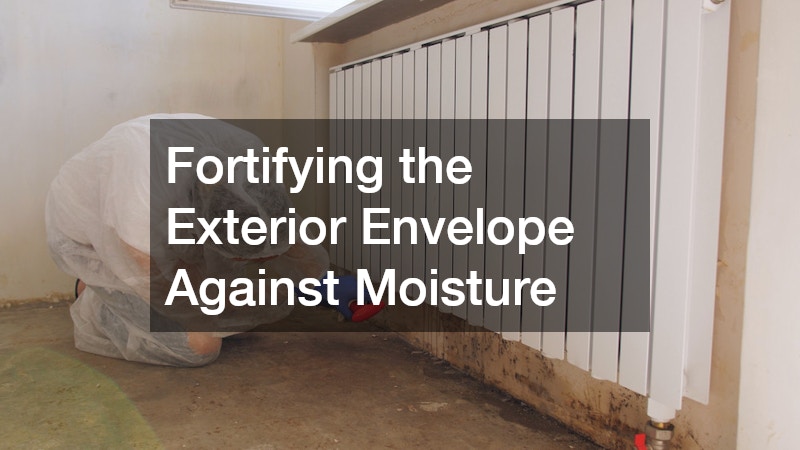
It is a profound financial mistake to spend a small fortune on beautiful interior plaster, high-end custom cabinetry, and premium paint if the exterior shell of your house allows water to slowly seep into the wall cavities. Moisture is the ultimate enemy of residential structures; it breeds silent mold, rots structural rim joists, and ruins insulation values. A comprehensive remodel should always move from the outside in, ensuring that the building envelope is completely impervious to the elements before any interior finish work begins.
Water management starts at the absolute highest point of the home: the roofline. When a roof sheds thousands of gallons of water during a heavy rainstorm, that water must be captured and systematically channeled far away from the home’s foundation. If your gutters are rusted, undersized, or pulling away from the fascia boards, rainwater will cascade down the side of the house, pooling at the base of the foundation walls and leaking into the crawlspace or basement. Inspecting, clearing, or completely replacing old gutters with high-capacity seamless systems is a critical prerequisite to protecting your interior renovation investment.
Once the roofline drainage is secured, the focus must shift to the vertical walls of the structure. Old, cracked wooden planks or warped vinyl panels can harbor hidden pockets of wood rot and pest damage that are impossible to see from the living room. If you notice signs of peeling interior paint or a faint musty smell along an exterior wall, it is highly likely that water is breaching the outer defense layer.
Enlisting the expertise of a professional siding company allows you to strip away compromised exterior materials, inspect the underlying plywood sheathing for structural integrity, and apply a modern, breathable house wrap. This protective layer keeps liquid water out while allowing interior vapor to escape, creating a tight, energy-efficient envelope. Taking care of these exterior vulnerabilities ensures that the beautiful new kitchen or living room you build on the inside stays dry, safe, and pristine for decades.
Executing a Structural Integration Plan
Managing a major home remodel requires balancing a massive number of moving parts, but prioritizing the structural infrastructure ensures a smooth, predictable construction process. By addressing waste management, underground utilities, water pressure, climate control, and exterior weatherproofing before choosing your interior finishes, you build a home that is truly beautiful from the foundation up. Use the following comprehensive checklist to guide your pre-remodel infrastructure audit:
- Waste System Capacity: Confirm that your underground waste system is physically and legally rated for any added bedrooms or bathrooms before starting construction.
- Heavy Machinery Management: Map and flag all subterranean utility lines and tanks to prevent catastrophic crushing damage from heavy construction vehicles.
- Flow Rate Optimization: Test your private well system’s flow rate and pressure capacity to ensure it can supply new second-story additions or high-end multi-head showers.
- Mechanical System Sizing: Perform a professional climate load calculation to adjust your heating and cooling systems for new open-concept layouts.
- Exterior Envelope Security: Inspect and upgrade the roofline drainage and exterior wall cladding to prevent moisture from destroying your interior assets.
Taking the time to systematically check off these foundational items saves you from costly mid-project delays and protects your hard-earned financial investment. When the hidden systems of a house work flawlessly together, the cosmetic choices you make will shine even brighter, providing a safe, efficient, and comfortable space for your family to enjoy for many years to come.