Highlights:
- Warm minimalism blends simplicity with comfort, keeping only what adds function, meaning, or everyday ease rather than just removing clutter.
- It starts with intentional editing—questioning what you use, need, and genuinely value before making any design or styling changes.
- Soft, grounded color palettes help create calm, cohesive spaces, avoiding the harshness of overly bright whites or high-contrast schemes.
- Texture adds depth and warmth, using natural materials like wood, linen, ceramics, and woven elements to prevent a flat, cold look.
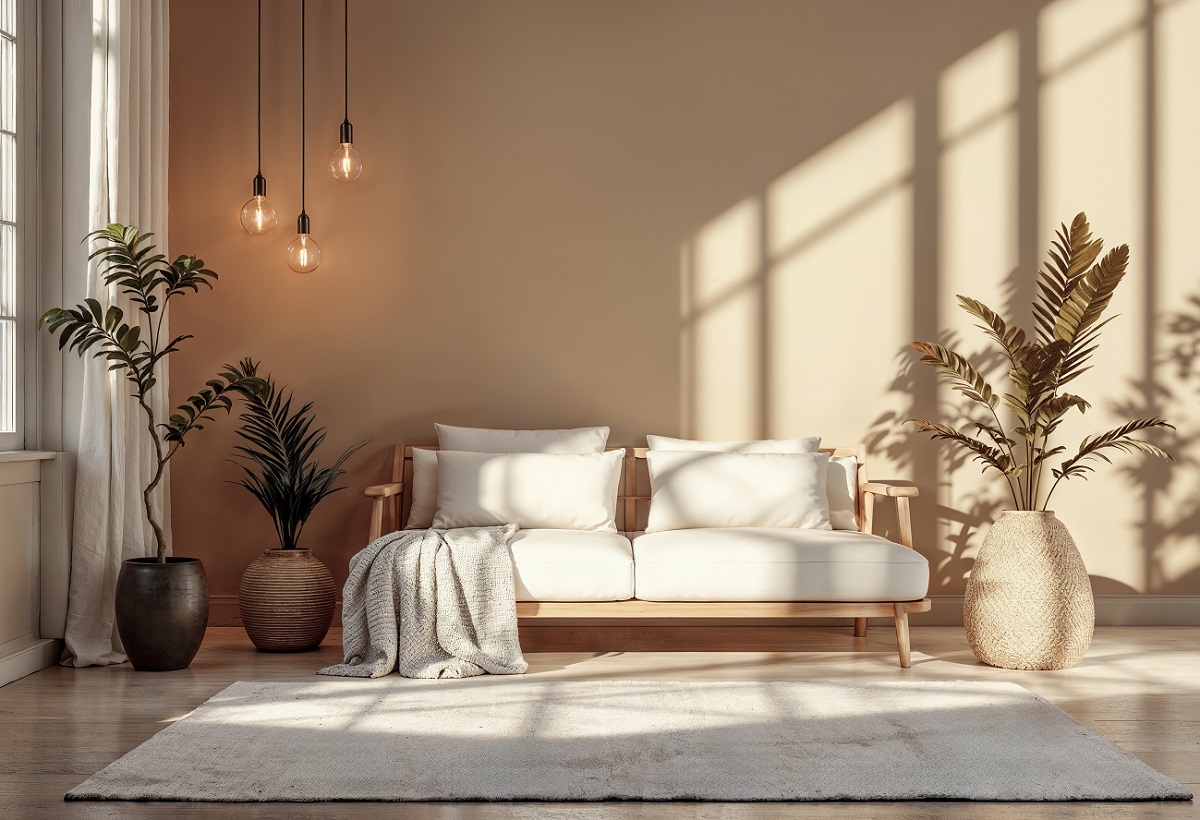
- Layered lighting improves mood and comfort, combining warm bulbs, lamps, and natural light instead of relying on harsh overhead fixtures.
- Furniture and layout should support ease of movement and comfort, with fewer, better pieces arranged to feel open and functional.
- Long-term balance comes from simple habits and intentional choices that keep the home organized, calm, and visually consistent.
Warm minimalism is what happens when simplicity meets comfort without turning your home into a showroom. It keeps the clean lines and clutter-free mindset of minimalism, but softens everything with texture, warmth, and lived-in character. The result is a space that feels peaceful, but still welcoming enough that you actually want to spend time in it.
If traditional minimalism sometimes feels too sterile or “untouchable,” warm minimalism solves that problem. It’s not about stripping your home down to nothing. It’s about keeping only what matters and making sure those things feel good to live with every day.
Below is a complete guide to understanding and building a warm minimalist home that feels calm, balanced, and genuinely comfortable.
What Warm Minimalism Actually Means in Everyday Living
Warm minimalism is often misunderstood as just “adding cozy textures to a minimalist room,” but it goes deeper than that. It’s a design philosophy that prioritizes emotional comfort as much as visual simplicity.
Instead of focusing only on what you remove, warm minimalism also asks: What do you keep, and how does it make you feel?
At its core, it blends three ideas:
- Simplicity: fewer but more intentional items
- Comfort: materials and layouts that feel inviting
- Functionality: everything has a purpose, even decor
This approach works especially well in modern homes where people want less clutter but don’t want their space to feel cold or lifeless. Think soft lighting instead of harsh overhead bulbs, natural materials instead of glossy plastic, and furniture that looks as good as it feels to use.
Warm minimalism also adapts easily to different lifestyles. Whether you live in a small apartment or a larger house, the principles scale without making your space feel empty.
Starting With a Clear Foundation Before Styling Anything
Before you even think about decorating, warm minimalism begins with editing the space you already have. This step is less about “getting rid of everything” and more about removing what creates visual and mental friction. A home can technically be tidy but still feel overwhelming if it’s filled with unnecessary objects, mismatched furniture, or things you no longer actually use.
Instead of rushing into styling decisions, it helps to slow down and evaluate your space room by room. The goal is to understand what deserves to stay because it supports your lifestyle, not just because it has always been there.
A useful way to approach this is by asking more intentional questions:
- Do I use this regularly in my day-to-day routine?
- Does this item genuinely make the space feel more comfortable?
- Would I choose to buy this again today if I didn’t already own it?
- Is it adding function, or just taking up visual space?
- Does it feel aligned with the kind of home I want to live in?
Once you start answering honestly, patterns usually become obvious. Most homes don’t feel “cluttered” because of obvious mess, but because of small accumulations of items that don’t have a clear purpose anymore.
After removing unnecessary visual noise, the space almost always feels lighter. But what makes warm minimalism different from strict minimalism is what happens next—you don’t stop at removal, you rebuild with intention.
A helpful approach when reintroducing or keeping items in your space:
- Choose furniture with softer silhouettes instead of sharp, rigid edges
- Maintain open walking paths so movement through rooms feels natural
- Remove duplicate items or “backup just in case” objects that never get used
- Limit decor to meaningful pieces rather than filling shelves for the sake of balance
- Keep surfaces partially open instead of fully filled or completely empty
The real objective isn’t to strip everything down. It’s to create clarity, where every object in the room feels like it belongs without competing for attention.
Choosing a Color Palette That Feels Soft, Not Stark
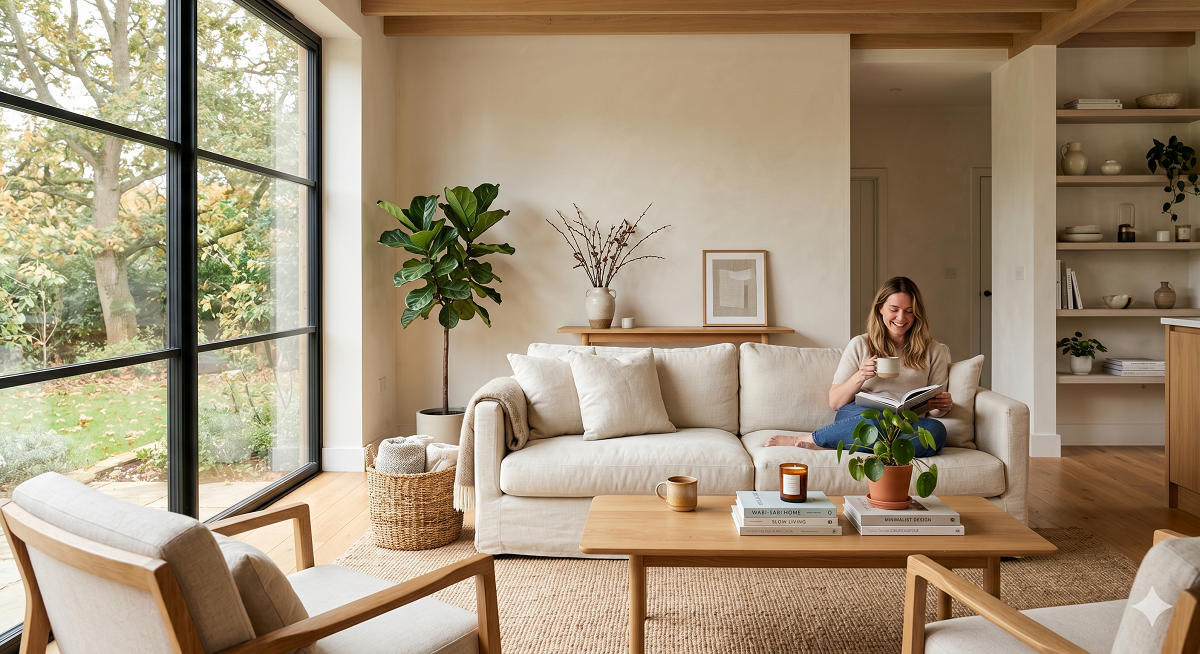
Color is one of the fastest ways to influence how a room feels emotionally. A space can be beautifully arranged, but if the tones are too cold or harsh, it will still feel unwelcoming. That’s where warm minimalism shifts away from traditional stark minimal design.
Pure white walls, high-gloss finishes, and strong black-and-white contrast can look stylish in photos, but in real life they often create a slightly clinical atmosphere—especially in spaces with limited natural light.
Warm minimalism leans toward muted, grounded tones that feel lived-in and calming without being visually heavy. These often include:
- Warm whites with beige or cream undertones
- Soft taupe and muted greige
- Sandy neutrals that reflect natural light gently
- Muted terracotta or clay-inspired shades
- Warm gray instead of cooler, bluish gray tones
- Earthy greens like sage or olive
- Deep browns used sparingly for grounding contrast
The goal is not to turn your home into a beige space. Instead, it’s about building a palette that feels cohesive and emotionally steady, where no single color feels too loud or disruptive.
A practical way to structure your palette is to limit it intentionally. When too many colors compete, even a minimalist space can feel visually busy.
Try working with a simple framework like this:
- One base neutral that dominates walls or large surfaces
- One secondary warm tone for furniture or textiles
- One accent color used sparingly for personality
- One optional grounding shade for contrast and depth
Keeping your palette tight doesn’t limit creativity—it actually enhances it. When colors are controlled, texture, shape, and light become more noticeable, which is exactly what warm minimalism relies on.
The Role of Texture in Creating Warmth
If color sets the emotional tone of a room, texture is what makes it feel physically inviting. A space without texture often feels flat, even if it is visually clean. That’s why warm minimalism places a strong emphasis on layered materials that engage both sight and touch.
Texture is what turns a room from something you observe into something you want to be in.
You can introduce warmth through a variety of subtle but effective choices:
- Linen curtains that move softly with air instead of stiff synthetic blinds
- Wool or cotton throws that add softness to sofas and chairs
- Natural wood furniture that shows visible grain and imperfection
- Handmade ceramics or slightly irregular decor pieces
- Woven baskets that double as storage and texture
- Layered rugs that define zones within open spaces
- Matte finishes instead of overly polished or reflective surfaces
Even small swaps can completely shift the atmosphere of a room. For example, replacing a glossy coffee table with a matte wood surface instantly reduces visual coldness and adds a grounded, tactile feel.
The key is balance. Too many textures competing at once can feel chaotic, even in a minimal space. Instead, think of layering a few complementary materials that naturally belong together—wood with linen, ceramic with cotton, stone with soft fabric.
Warm minimalism isn’t about adding everything soft you can find. It’s about choosing textures that quietly support each other.
Lighting That Shapes Mood Instead of Just Visibility
Lighting is often treated as an afterthought, but in warm minimalism it becomes one of the most important design elements in the entire home. It doesn’t just help you see—it changes how every surface, color, and texture is perceived.
A cold, bright ceiling light can make even a beautifully designed room feel harsh. On the other hand, layered warm lighting can make a simple space feel deeply comfortable.
Warm minimalism avoids relying on a single overhead light source. Instead, it builds lighting in layers:
- Ambient lighting: the general glow that fills the room softly
- Task lighting: focused light for reading, cooking, or working
- Accent lighting: subtle highlights that create depth and mood
Each layer plays a different role, and together they create a more natural and flexible environment.
Color temperature also matters more than most people realize. Warm minimalism typically uses bulbs in the 2700K–3000K range because they mimic soft evening light rather than harsh daylight indoors.
Some practical lighting adjustments include:
- Switching cool white bulbs to warm white alternatives
- Using floor and table lamps instead of relying on ceiling fixtures
- Installing dimmers to adjust brightness based on time of day
- Allowing natural light in during daytime with sheer or light-filtering curtains
- Positioning lights at different heights to avoid flat illumination
Good lighting changes how a home feels throughout the day. In the morning, it can feel open and fresh. In the evening, it becomes soft and calming. That shift is what makes a space feel “alive” rather than static.
Furniture Choices That Support Comfort and Simplicity
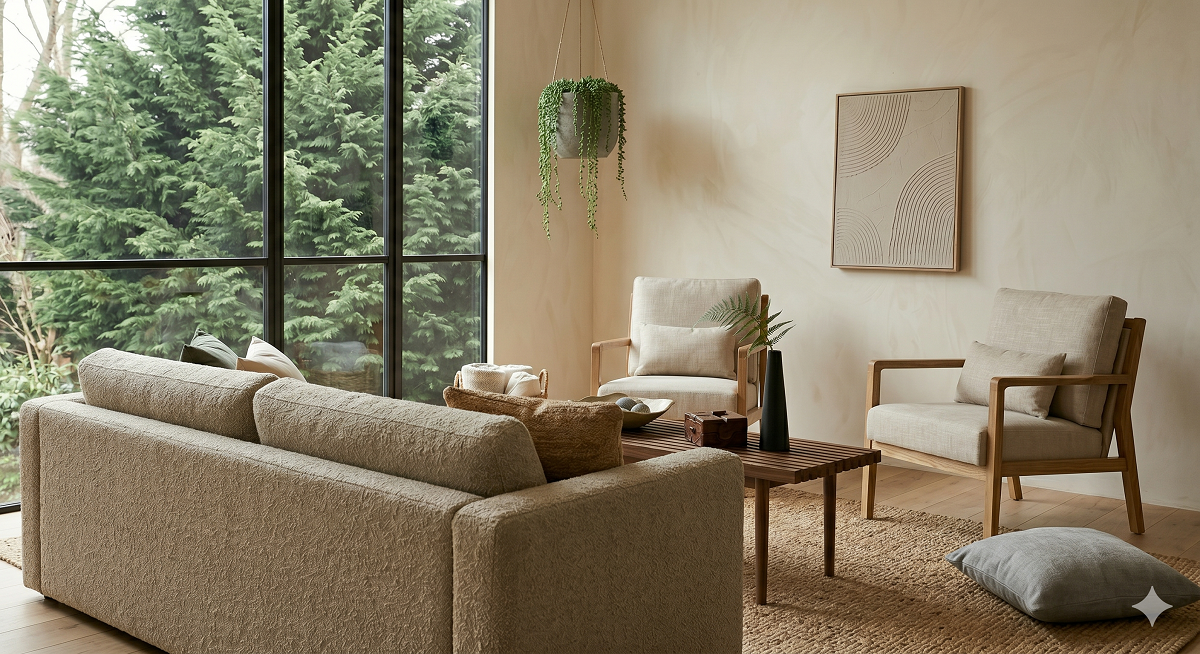
Furniture in a warm minimalist home should never feel like it exists just to fill space. Every piece should earn its place by being both functional and visually calm. Instead of focusing on quantity, the emphasis is on quality and intention.
When selecting furniture, look for pieces that:
- Have soft, rounded or gently structured silhouettes
- Use natural materials like wood, linen, or leather
- Serve more than one purpose when possible
- Maintain visual lightness rather than heavy bulk
The idea is to reduce visual pressure in the room. Too many small pieces can make a space feel fragmented, while fewer well-chosen items create a sense of stability.
Some practical examples include:
- A solid wood dining table that anchors the room instead of a glass surface that reflects clutter
- A modular sofa that can adapt to different layouts or gatherings
- Storage benches that provide seating while hiding everyday items
- Low-profile shelving that blends into the wall instead of dominating it
- Bed frames with simple lines and natural finishes rather than ornate designs
This approach supports both function and calmness. The furniture doesn’t demand attention—it quietly supports how you live.
Creating Flow Through Layout and Space Planning
A home can have beautiful furniture and still feel uncomfortable if the layout is off. Warm minimalism pays close attention to how people move through a space and how naturally each area connects to the next.
Good flow is less about strict design rules and more about ease of movement and mental clarity.
Strong layout principles include:
- Clear, unobstructed walking paths between furniture pieces
- Avoiding overcrowding in focal areas like living rooms or entryways
- Arranging seating to encourage conversation and comfort
- Leaving intentional breathing room between larger objects
- Positioning furniture to support natural movement rather than block it
One common mistake is pushing all furniture against the walls. While this can feel like it opens space, it often creates awkward empty centers. In many cases, floating furniture slightly inward creates a more grounded and balanced feel.
A helpful way to think about layout is to treat each room as a series of experiences rather than a fixed arrangement. Ask yourself: how does someone enter, move through, and settle into this space?
When that flow feels natural, the home immediately becomes easier to live in.
Storage That Disappears Into the Background
Clutter is one of the quickest ways to break the calm feeling warm minimalism tries to achieve. But the solution isn’t constant tidying—it’s smarter storage that reduces visual disruption from the start.
Effective storage should feel integrated, not added on. Ideally, it blends into the home so well that you barely notice it exists.
Some effective storage strategies include:
- Built-in cabinets that match wall colors for a seamless look
- Closed storage solutions for everyday items like electronics and paperwork
- Woven baskets for items that need quick access but shouldn’t be visible
- Under-bed storage for seasonal or rarely used belongings
- Furniture with hidden compartments or dual-purpose design
Open shelving can still work, but it needs discipline. Instead of using it as general storage, treat it as a curated display area for a limited number of meaningful or useful items.
A simple rule helps keep things grounded: if something doesn’t need to be seen daily, it probably shouldn’t be.
Bringing Nature Indoors Without Overdoing It
Natural elements play a key role in softening the clean structure of minimal spaces. They introduce irregularity, warmth, and subtle movement that make a home feel more human.
However, warm minimalism avoids turning indoor spaces into overly styled plant displays. Instead, it integrates nature in a controlled, intentional way.
Some simple ways to bring nature indoors include:
- A few well-placed indoor plants with simple, sculptural shapes
- Fresh flowers occasionally used as focal points on tables or counters
- Wooden furniture or accents that highlight natural grain
- Stone, clay, or ceramic materials in decor and tableware
- Natural fiber rugs and mats that add subtle texture underfoot
Plants are especially effective because they soften sharp architectural lines and introduce organic flow into structured spaces. The key is moderation—enough greenery to feel alive, but not so much that maintenance becomes overwhelming.
How Personal Items Fit Into Warm Minimalism
Warm minimalism is often misunderstood as removing personality from a home, but the opposite is actually true. It encourages personal expression—it just asks for it to be intentional rather than excessive.
Instead of displaying everything you own, the focus shifts to curating what truly represents you and your life.
Meaningful items might include:
- A small selection of framed photos that carry emotional weight
- Books that you genuinely read or return to over time
- Objects collected from travel or important life moments
- Artwork that complements your color palette and mood
- A few sentimental pieces displayed with space around them
The key idea is that every item should feel chosen, not default. Nothing should feel like it’s there just to fill space or meet an aesthetic expectation.
When personal items are curated this way, they stand out more—not less.
A Practical Example: Small Upgrades That Shift the Whole Feel
Sometimes you don’t need a full redesign to move toward warm minimalism. Small upgrades can shift the entire atmosphere of your home.
For example:
- Swap bright white bulbs for warm lighting
- Replace synthetic textiles with natural fabrics
- Reduce visible countertop clutter in kitchens
- Add a textured rug to anchor a room
- Use matching storage containers to reduce visual noise
These are considered home upgrades that enhance daily life because they don’t just change how a space looks—they change how it feels to live in every day.
Common Mistakes That Make Minimalist Homes Feel Cold
Even with good intentions, it’s easy to accidentally create a space that feels too sterile. Here are common mistakes to avoid:
- Using only cool tones with no warmth
- Removing too much furniture, making rooms feel empty
- Relying heavily on harsh overhead lighting
- Choosing all sleek surfaces with no texture
- Avoiding decor entirely in the name of minimalism
Warm minimalism is about balance. If something feels too empty or uncomfortable, it usually needs warmth—not more removal.
Maintaining a Warm Minimalist Home Long-Term
The hardest part of any design style isn’t setting it up—it’s maintaining it.
A few habits help keep your space aligned:
- Do a quick weekly reset to remove visual clutter
- Avoid impulse decor purchases
- Regularly reassess what you actually use
- Rotate decor seasonally instead of adding more items
- Keep surfaces mostly clear, but not completely empty
Think of it as maintenance rather than constant effort. The more intentional your home is from the start, the easier it is to keep it that way.
Why Warm Minimalism Works for Modern Living
People are spending more time at home than ever, and that changes what we need from our spaces. A home shouldn’t just look good in photos—it should support rest, focus, and everyday living.
Warm minimalism works because it:
- Reduces visual stress
- Makes cleaning and maintenance easier
- Encourages intentional living
- Creates emotional comfort without clutter
- Adapts to different lifestyles and budgets
It’s not about perfection. It’s about creating a space that feels steady and easy to live in.
Closing Thoughts: Building a Home That Feels Like a Reset Button
Warm minimalism is ultimately about how your home supports your daily life. It strips away unnecessary noise while keeping comfort front and center. Instead of feeling like a space you have to maintain constantly, it becomes a place that helps you slow down and breathe a little easier.
When done well, it doesn’t feel like a design trend at all. It just feels like home—quiet, warm, and naturally balanced.